The Sash Test: Why I Ask About Windows Before Booking a UK Hotel
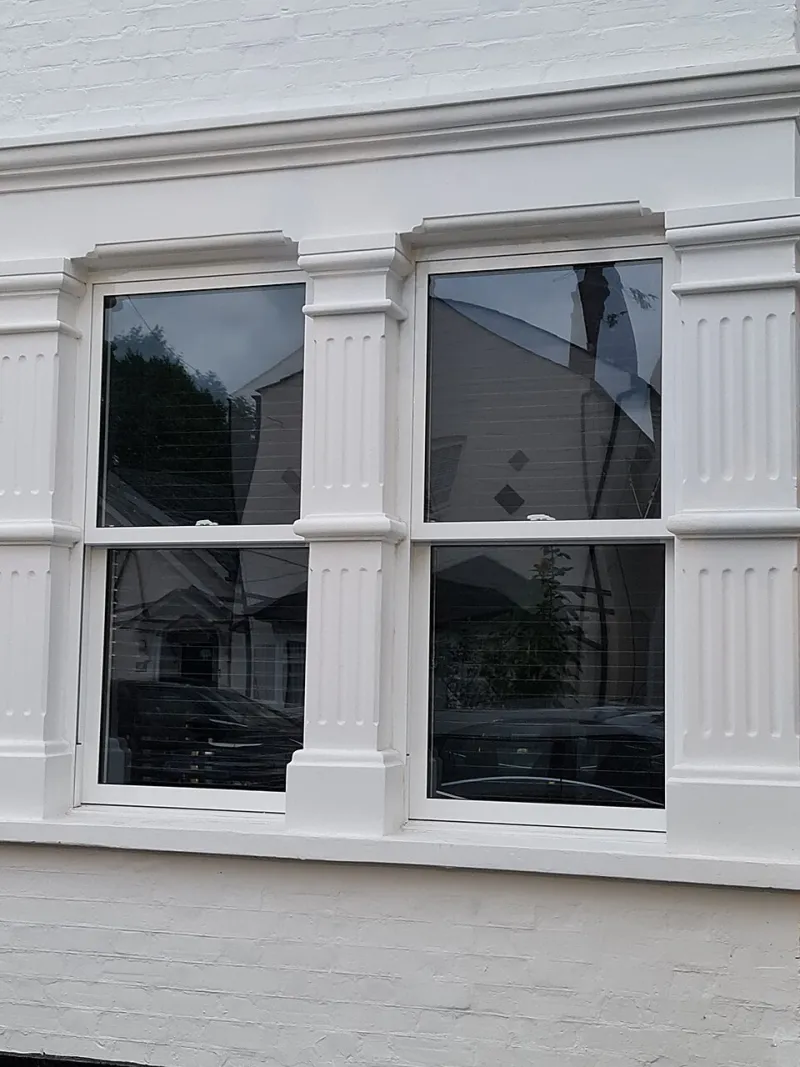
Photo: Durajoin, CC BY 4.0, via Wikimedia Commons
There is a particular kind of silence in a hotel room with sealed glass. Not the good silence of a deep country lane, but the flat, slightly stuffy hush of a room that has been shut up and left to its air conditioning. You notice it after a train journey, usually while standing with a bag in one hand and the key card in the other, trying to work out why the view looks like a poster rather than a place.
At Hildebrand Hotel Guide we spend a lot of time on the details that separate a properly run independent UK hotel from one that merely photographs well. The window is one of the most revealing. It is not about being precious. It is about control: the ability to let in a bit of November air, hear the church bells, shut out a delivery van, or simply prove that the room is not sealed off from the village outside.
The first two minutes in the room
I have a small routine now. Put the bag down. Look at the window. Try the handle. If it is a sash, see whether it moves without a fight. If it is a casement, check whether the restrictor lets in more than a finger-width. Then listen. Can you hear the road, the kitchen extractor, the bin store? All of that matters more than whether the cushions have been artfully arranged.
A window that opens is not automatically a good window. A single-glazed sash above a busy A-road can be worse than a sealed pane with proper acoustic glazing. A roof light that opens onto a flat roof is not a view. But the attempt tells you something. It says the hotel expects guests to want air, to want choice, to want the room to behave like a room rather than a climate-controlled box.
What sealed glass actually tells you
There are legitimate reasons to seal a window. Safety in a high-rise. Noise in a city centre. Energy performance in a listed building where secondary glazing was the only sensible option. I am not suggesting every hotel should let you fling open a sash onto a motorway. What I object to is the absence of any alternative and the absence of any honesty about it.
If a room has no opening window, it needs proper mechanical ventilation. Not a wheezy bathroom fan and a hope. It needs air that feels fresh after a night's sleep, not air that has been recycled through a unit nobody has serviced since the last refurbishment. When a hotel gets this wrong, you feel it by 3am: the dry throat, the heavy head, the urge to prop the door open with a shoe.
For an independent hotel, the window is also a maintenance signal. A painted-shut sash, a handle that spins, a restrictor that has been screwed down to nothing: these are small failures. They suggest nobody walks the rooms with a critical eye. And if nobody checks the window, what else is being left? The shower seal? The radiator valve? The smoke alarm battery?
The booking checks I use
I do not think it is unreasonable to ask about windows before paying a deposit. I usually put it in one line with the other requests: 'Could we have a quiet room with a window that opens, please?' Most independent hotels answer directly. Some say yes. Some say the windows open but only a few inches. Some admit the room is sealed and offer a fan. All of those answers are useful.
A few practical checks:
- Search reviews for 'stuffy', 'hot', 'no air', 'window' and 'air con'. Guests complain about ventilation far more often than hotels realise.
- Look at the room photos for sash cords, casement handles and secondary glazing. A sealed unit often has a neat, flush finish and no visible catch.
- Ask about the view as well as the window. A window that opens onto an internal light well is not a weekend-maker.
- If you are sensitive to noise, ask what is outside. A charming cobbled street can also be a 6am delivery route.
- In winter, an openable window is useful for controlling a radiator that has only two settings: off and Sahara.
Where the window earns its keep
A handful of independent UK stays do this well, and they tend to be the sort of places where the building and the landscape are part of the point.
The Beckford Arms in Wiltshire is a good example: a proper country pub with rooms, sash windows and a garden that deserves more than a glance. Ask for a room away from the road and you get the full effect: fresh air, birdsong and the sense that you are actually in the countryside rather than looking at a photograph of it.
The Bull in Charlbury, Oxfordshire, is another old-building stay where the windows are part of the character. It is a Cotswold pub with rooms, not a spa, and that is the appeal. The same goes for The Felin Fach Griffin near Brecon, where the windows frame real Welsh hills and the air smells of grass rather than corridor.
Further north, The Duncombe Arms in Derbyshire and The Laroch in Ballachulish both make the case for a room with a view that can actually be opened. Ask specifically when booking; old buildings are full of exceptions, and a good hotel will tell you which room suits your needs.
The view is part of the room
A weekend break is not just a bed. It is the hour before dinner, the Sunday morning lie-in, the moment you open the curtains and decide whether to go back under the duvet. A window that opens makes that moment feel less like a transaction and more like a stay. You hear the weather. You smell the sea or the rain on the pavement. You get a sense of place that no amount of Farrow & Ball can fake.
So next time you book, ask the small question. It is not fussy. It is the sort of detail that separates a hotel that is merely decorated from one that is properly run. And if you arrive to find the glass sealed and the air heavy, say so at reception. The best hotels will fix it. The others have told you something useful before you have even unpacked.