Wet Nose, Warm Welcome: The UK Hotel Clue I Trust More Than the Lobby Flowers
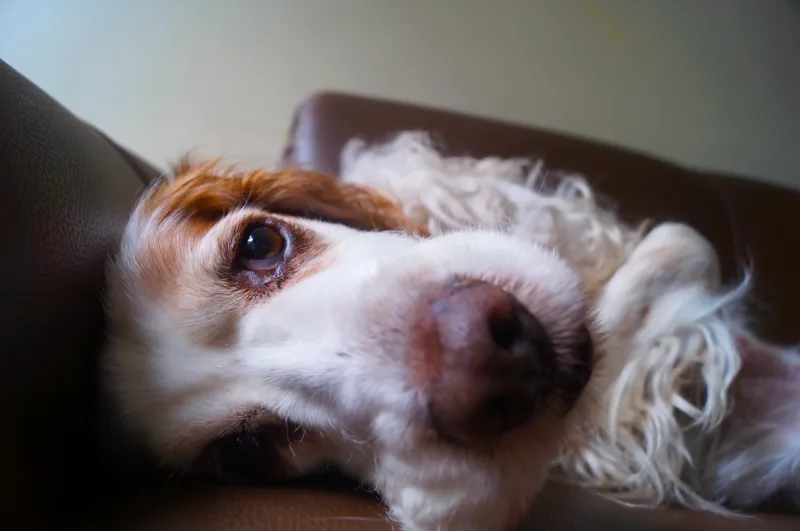
There is a particular kind of UK hotel dog that appears in every third photograph on the website: head tilted, fire blurred behind, a tweed blanket arranged with more care than most people manage for a wedding. It is a lovely image. It is also almost entirely useless as a guide to whether the hotel is any good.
The house dog only becomes interesting when it stops posing and starts behaving like a dog. When it is asleep under the reception desk, mildly in the way of the luggage trolley. When a member of staff steps over it without looking down. When it has a water bowl that is actually clean and a bed that is actually used. That is when the resident dog tells you something worth knowing.
A dog is not a decor decision
I have come to think of the resident dog as a character reference. Not because dogs are magical judges of human worth — most would sell you out for a piece of ham — but because keeping a dog in a hotel is a small, revealing operational choice. It affects housekeeping, food service, guest expectations, insurance, staffing and the general tolerance level of the place.
A hotel that gets this right tends to be comfortable in its own skin. It does not need to announce that it is dog-friendly in 14 different fonts. The dog simply exists, with boundaries, and the staff know its routine. A hotel that gets it wrong usually treats the dog as another piece of soft furnishing: present in the photos, absent from the actual life of the building.
That is the distinction I look for now. Is the dog part of the rhythm, or part of the campaign?
What the dog actually tells you
A genuinely resident dog often reveals a hotel with a settled personality. It suggests the people running the place are there for the long haul, not just until the next refurbishment. It hints at a certain looseness around the edges — the good kind — where guests are trusted to behave reasonably and muddy boots are not treated as a public emergency.
You can learn a lot from how staff interact with the dog. If three different people know its name, its quirks and which sofa it is not allowed on, that is a good sign. If a receptionist looks faintly surprised when you ask about it, you are probably looking at a stock-photo situation.
The dog’s behaviour matters too. A resident dog that is relaxed, ignored by the team and politely uninterested in guests is usually a sign of a well-run house. A dog that is over-excited, under-supervised or left to beg at the breakfast table is not charming. It is a management problem with a tail.
The questions worth asking before you book
I would not book a UK weekend away purely because a hotel has a house dog. But if the dog is part of the appeal, a quick call is worth more than an hour of scrolling. Ask whether the dog is actually in residence — resident dogs retire, move house or develop a sudden dislike of bicycles. Ask where the dog is allowed and where it is not. Ask whether it is comfortable with children, other dogs and people who do not want a wet nose near their breakfast.
The best answers are specific. “Oh, Bramble is usually in the bar until about nine, then she goes up to the family flat” is a good answer. “Yes, we have a dog” is not. Ask whether the dog is walked on the property and whether guests are expected to join in. Ask what happens if the dog is unwell or the hotel is busy. A properly run house will have a plan; a hotel using a dog as decoration will have a shrug.
One more question I always ask: is the dog allowed in the dining room? The answer tells you a lot about how the hotel thinks about guests who are not dog people. The best places manage this with quiet confidence — a certain corner, a certain time, a certain understanding that not everyone wants to share their scrambled eggs with a spaniel.
Three small signals that matter
First, look for the bowl. Not the artisanal ceramic one in the photos, but the everyday water bowl by the door. If it is clean and full, someone is paying attention. If it is dry and has a leaf in it, the dog may still be lovely, but the system is not.
Second, look for the towel. Good dog-friendly hotels put a towel or a blanket near the entrance without making a performance of it. It says: we know what wet paws do to a flagstone floor, and we have thought about it.
Third, look for the walk. A house dog is a useful excuse for the hotel to know its own local area. The best places have a short printed route, a longer one for the keen, and a clear view on which pubs or cafés will tolerate a damp dog. That is not just dog hospitality. That is good hotelkeeping.
Where the dog feels part of the rhythm
I am wary of naming house dogs too confidently, because dogs are not permanent fixtures and websites are rarely updated with the news that a lurcher has retired to Somerset. But there are independent UK stays where the dog culture tends to feel embedded rather than bolted on, and where I would ring first to ask about the current incumbent.
The Beckford Arms in Wiltshire is the sort of place where a dog fits naturally: fires, walks, a pub that understands boots and wet coats. The Brisley Bell in Norfolk has a similarly relaxed approach, with the kind of informal warmth that makes a weekend feel less like a performance. The Felin Fach Griffin near Brecon is well placed for the kind of long, muddy walk that makes a house dog’s presence feel logical rather than cute. Further north, The Torridon in the Scottish Highlands has the space and the weather for a dog to be a genuine part of the landscape rather than a lobby accessory.
These are not promises of a specific dog at a specific time. They are the kinds of independent stays where the question is worth asking, because the answer is likely to be part of a wider approach rather than a marketing line.
When the dog is the whole show
The opposite is easy to spot. The dog appears on the website, in the welcome folder and on the Instagram grid, but not in the actual room where guests gather. Staff do not know where it sleeps. There is no water bowl. There is a faint air of surprise that anyone would ask. That is not a house dog. That is a prop with a pulse.
The resident dog is not a guarantee of a good hotel. Plenty of excellent UK hotels have no dog at all, and plenty of mediocre ones have a very handsome one. But when the dog is properly part of the place — known, bounded, relaxed and slightly in the way — it is a useful signal. It says the hotel is run by people, not just systems. And on a wet November weekend in 2026, that is worth more than a perfectly arranged tweed blanket.