What the Morning Table Tells You Before You Pay the Bill
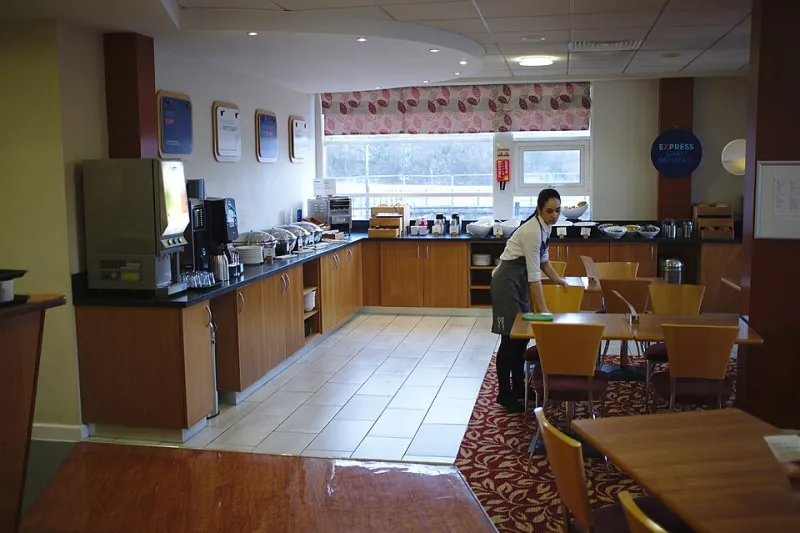
Photo: Bob Harvey , CC BY-SA 2.0, via Wikimedia Commons
Checkout is a poor time to judge a hotel. By then the bags are packed, the bill is printed and everyone is being polite. The real audit happens earlier, in the breakfast room, when the hotel has to feed people who have paid to be there and has not yet had the chance to tidy away the evidence.
Breakfast is not about lavishness. A hotel can put on a beautiful spread and still fail the test. The morning table reveals whether the place is run with care or merely decorated with it. It shows you where the money goes, how the staff are treated, and whether anyone in the building has actually tasted the coffee.
The first tell: the bread and the butter
A good breakfast starts with small things that are easy to get wrong. Bread that has been cut hours earlier and left to curl at the edges is a signal. So is butter in those little plastic tubs when the hotel has spent a fortune on the dining room chairs. Neither is a crime on its own, but together they suggest a kitchen that is thinking about cost rather than pleasure.
The better version is simple: bread that tastes of something, butter that is soft enough to spread, and jam that has not been scooped out of a catering tub into a tiny dish by someone who clearly resents the task. Local sourcing is a fine thing, but only if it is real. A chalkboard listing three nearby farms is useful. A chalkboard listing three nearby farms while the sausages arrive in a frozen box is theatre.
Eggs are a small act of theatre
Cooked-to-order eggs are one of the clearest signs that a hotel is paying attention. They require a kitchen to be staffed, a service to be timed, and someone to care whether the yolk is runny or the whites are set. A buffet of scrambled eggs sitting under a lamp can be perfectly acceptable at a certain price. At a hotel charging proper weekend-break money, it is a choice.
Watch how the eggs arrive. Are they hot? Are they on toast that has been waiting, or toast that has just been made? Is the black pudding better travelled than you are? These are not nitpicks. They are clues about the distance between the hotel's brochure and its kitchen.
Coffee is the honesty test
You can learn a lot from the coffee. A hotel that serves good coffee at breakfast is usually a hotel that has thought about the whole morning. A hotel that serves thin, stewed filter coffee and calls it a day is telling you something too. It does not have to be a specialist roastery. It just has to taste as if someone has noticed.
The same goes for tea. A proper pot, hot water, and a jug of milk that has not been sitting out since 6.30am. These are small things, but they are the sort of small things that separate a hotel that is run from a hotel that is merely open.
The busy Sunday test
Sunday breakfast is the stress test. The room is full, the checkout deadline is looming, and the staff are caught between people who want another coffee and people who want their bill. This is where a hotel shows its training.
Do the staff move with purpose or with panic? Are tables cleared before they become a museum of crockery? Does the person on the door greet people, or simply point at a table? Is there someone in charge, or does the room feel like a group project that has gone wrong? You do not need perfection. You need the sense that someone has planned for this exact moment.
A hotel that handles a busy Sunday with calm is usually a hotel that handles everything else with calm. A hotel that falls apart at 9.15am will probably fall apart when the boiler breaks or the restaurant runs out of the thing you wanted.
What the room says when nobody is watching
Look at the corners. The high chair that has been wiped. The fruit that has been cut fresh rather than left to brown. The milk that is cold. The labels on the buffet that are accurate. The staff who know which table is waiting for eggs and which one has been forgotten. These are not glamorous details. They are the ones that matter.
Also look at how the staff talk to each other. A breakfast room where the team is tense and snappy is rarely a happy hotel. A breakfast room where someone is being trained kindly is usually a hotel with a future. You are not there to inspect the management, but you can read the atmosphere. It is part of the stay.
How to read it without being a nuisance
You do not need to interrogate the waiter. Just pay attention. Order the cooked breakfast rather than the buffet if you want the clearest signal. Ask for coffee twice and see what happens. Watch whether the table is cleared while you are still eating or after you have finished. Notice whether the staff seem to know the room or just the table numbers.
And be fair. A small independent hotel with six rooms is not a five-star city operation. The standard is not opulence. The standard is care. If the breakfast is simple but thoughtful, the coffee is hot and the staff seem pleased you are there, that is a good hotel. If the room is beautiful but the morning feels like a concession, believe what you see.
Checkout will tell you what you owe. Breakfast tells you whether it was worth it.